Hey there,|
Welcome to another round of The Advantage Hit 📨 - where we spill inbox secrets that drive real conversions!
One of the biggest shifts happening in D2C right now is that retention is starting to matter more than acquisition.
Email didn’t suddenly become a “hot channel” again. Everything else just got painfully expensive!
Higher CPMs, rising CAC, tariffs and shrinking margins. So the brands winning right now are the ones extracting maximum revenue from the audience they already own.
The problem is, most email programmes are massively under-optimized and brands don’t even realize it. Campaigns are going out, flows exist and revenue is getting attributed.
So everything looks fine..Until you actually audit the account!
That’s when you usually find weak segmentation, poor deliverability, outdated flows, low engagement quality, and a surprising amount of revenue quietly being left on the table.
That gap between “email exists” and “email actually performs”?
That’s exactly what a good audit uncovers!
The 5 areas we check
What a real audit actually looks at and what it typically finds
This is not a checklist. Each of these areas has a specific failure mode that looks completely fine from the outside, until you dig in.
1. Deliverability
Your domain reputation is either your biggest asset or a ticking clock
Gmail and Yahoo tightened inbox rules in 2024. SPF, DKIM, and DMARC are now non-negotiable.
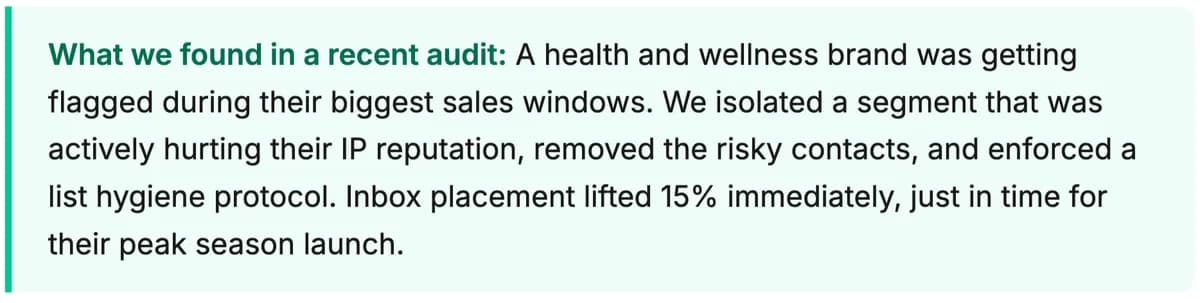
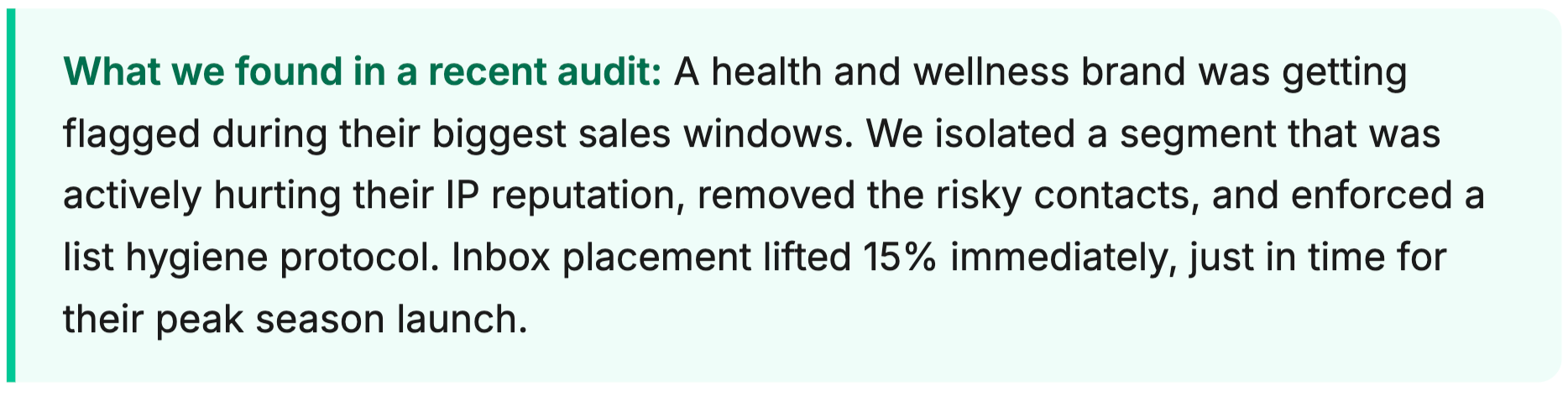
If your list has not been cleaned since then, or if you have been sending to cold, low-engagement contacts, your domain reputation is quietly degrading. You will not notice until a big send lands in spam. By then the damage takes months to undo.
👉Book your deliverability audit at $0
2. Flows
Your flows are your 24/7 sales team. Most brands haven’t checked on them in months.
Welcome flow, abandoned carts, post-purchase sequences - these run while you sleep and are supposed to be your most reliable revenue source.
The problem is most brands built them once, never touched them again, and have no idea what’s actually happening inside them.
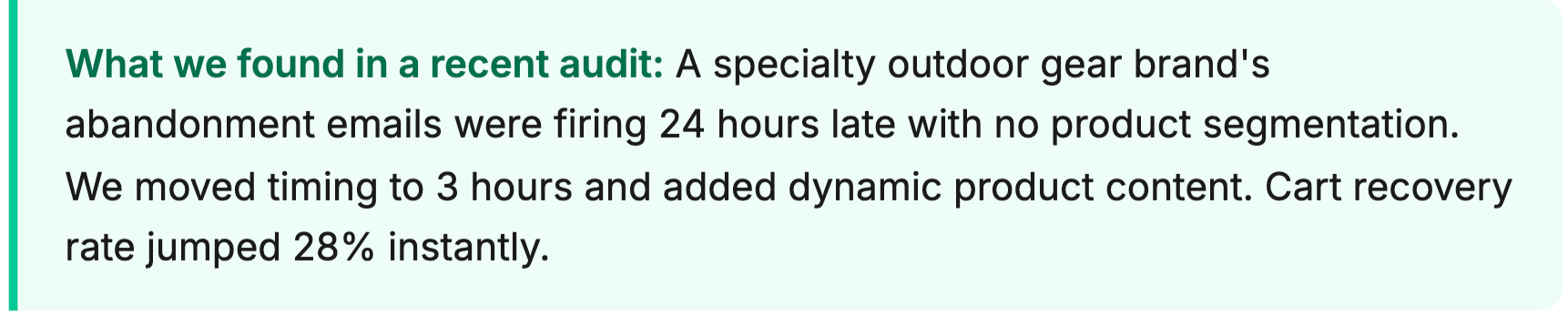
Broken product links from a Shopify update, triggers firing at the wrong time, emails going to people who already purchased. Duplicate flows running in parallel after an agency handover, splitting revenue and confusing attribution.
None of these show up as a red flag on your dashboard. They just show up as quietly flat numbers that nobody questions.
3. Campaigns
Open rates are lying to you. RPR is the number that tells the truth!
Most brands measure campaign success by open rate and total revenue. Neither tells you whether the email actually worked.
Revenue per recipient, RPR, is the metric that exposes what is really happening. We audited a brand recently that was celebrating a 55% open rate on their biggest send of the month.
Their RPR was $0.042. For context, a healthy campaign RPR sits between $0.15 and $0.40. They were leaving the majority of their potential revenue on the table every single send.

What’s your RPR right now?
If you do not know the answer, that is exactly why you need a campaigns audit.
4. List Health
You’re probably paying Klaviyo for subscribers who will never buy from you again.
Klaviyo bills by profile count. Every inactive, unengaged, or bot-submitted profile on your list is costing you money in two ways: the billing cost and the deliverability cost.
Sending to a dirty list tanks your sender reputation and inflates your metrics, making it impossible to make good decisions.
One home decor brand we audited found 30% of their active list had not opened an email in 180 days. We built a sunset segment, reactivated 7%, and suppressed the rest. Campaign ROI improved immediately!

👉Check your list health for free
5. Segmentation
Batch and blast is not a strategy. It’s a slow way to burn your best subscribers.
The brands generating serious email revenue are not sending more. They are sending smarter. We cut one brand’s campaign frequency by 57% and their revenue went up 19%.
The reason: they were fatiguing their most valuable segment with irrelevant sends. When you stop sending to people who do not want to hear from you, the people who do want to hear from you start converting at a completely different rate.



Why May is the right time and why October is already too late
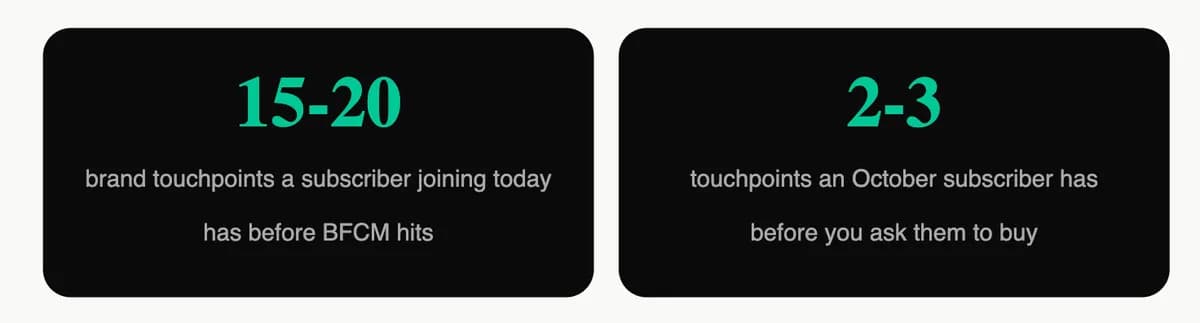
Q3 starts in five weeks. Q4, your highest-volume, highest-stakes sending window, is four months away. The brands that crush BFCM every year are not the ones scrambling to fix their email programme in October. They’re the ones who fixed it in the spring and spent the summer compounding the advantage!
The gap between a programme that is fixed in May and one that’s still broken in November isn’t a gap you catch up on. It compounds in the wrong direction.
Deliverability erodes, subscribers fatigue, and by the time the holiday sends go out the audience that should be your most valuable asset has already tuned out.

An audit takes one conversation. The fixes take days or weeks. The revenue impact runs for months!

Enjoyed the read ? Share it with your email obsessed peers.